Therapy in the spotlight for Spring: The importance of park play
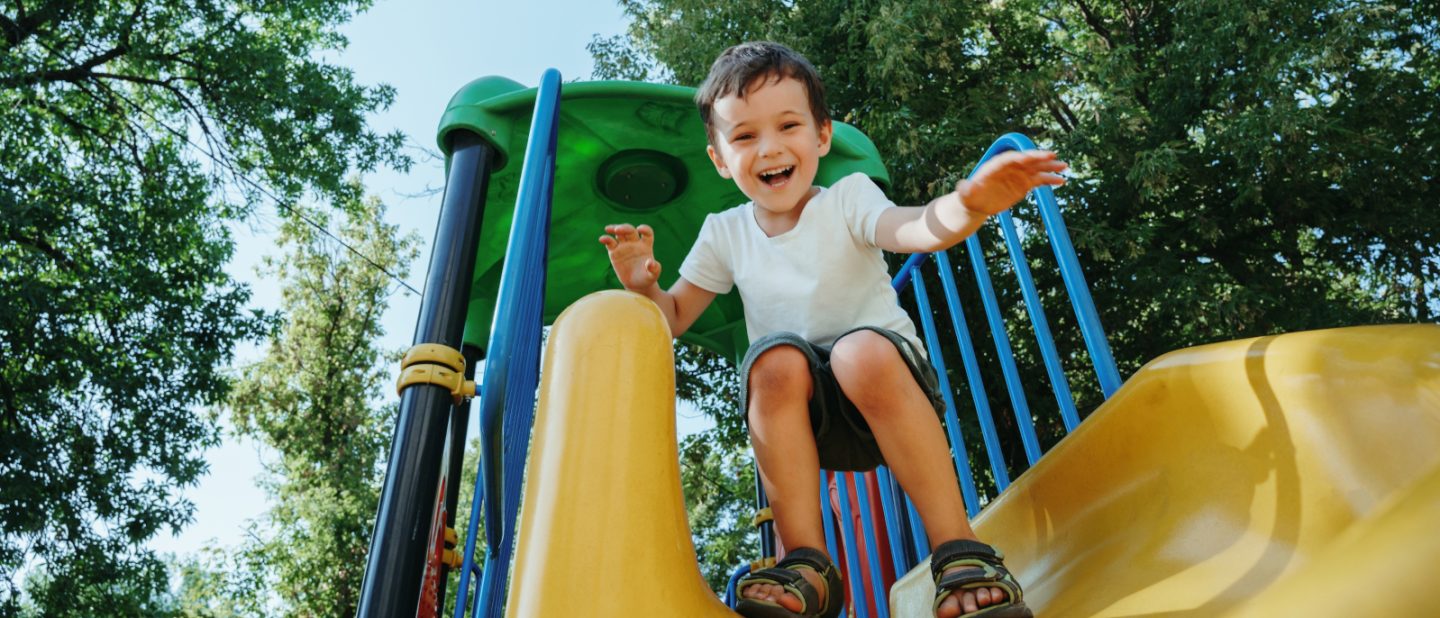
Playgrounds have long been a cherished part of childhood, offering more than just fun – they provide essential opportunities for development, exploration, and connection. In a world increasingly filled with screens and indoor entertainment, outdoor park play remains a vital component of healthy childhood development.
While digital devices can be convenient tools for keeping children engaged, especially during busy times, it’s important not to overlook the unique benefits of outdoor play. Visiting the park may require a little extra time and planning, but the rewards are well worth the effort.

Opportunities for social connection
Parks provide a natural setting for children to engage with others, offering valuable opportunities for social development.
Whether playing side by side or interacting, children often form connections with peers through shared play experiences. These interactions support the development of important social skills suchas turn-taking, sharing, cooperation, and understanding others’ needs.
In addition, certain playground features – such as sandpits, forts, or climbing structures – can inspire imaginative play, encouraging creativity and storytelling, as children explore and create their own worlds together.
Gross motor skills
Using playground equipment plays a vital role in the development of gross motor skills. Gross motor skills are movements which involve large muscles of the body for example, running, jumping, hopping and climbing. When children play in the playground, they experience opportunities to strengthen muscles and improve coordination and motor planning. Equipment such as ladders, monkey bars and climbing frames can support muscle strengthening and body awareness which are crucial for laying the foundations for more complex motor skills and physical activity such as swimming and sport.
Sensory benefits
The exploration of different environments, including parks and playgrounds, provides children with a diverse range of sensory experiences. When playing in these environments, children engage in activities that provide a range of unique sensory experiences, supporting the development of their sensory processing skills. From climbing and swinging to digging in the sand or running across uneven ground, these varied activities activate multiplesensory systems – proprioceptive, vestibular, tactile, visual, and auditory – all at once. This kind of multisensory input helps children learn how to process, organise,and respond to sensory information more effectively.
Developing self-regulation
Playgrounds and parks offer children valuable opportunities to support regulation, helping them manage energy levels and emotional state. Engaging in different types of play allows children to either increase or decrease their level of arousal depending on what their body needs. For example, swinging high into the air or spinning quickly on a merry-go- round can provide intense sensory input that helps some children release excess energy or “let off steam.” In contrast, slower, more controlled activities like climbing can support calming and focus.
Through these experiences, children begin to learn what kinds of movement and sensations help them feel “just right” – what energises them, what calms them, and what helps them stay focused. This growing awareness is an important part of developing self-regulation skills that support participation in daily routines, learning, and social engagement.
Cognitive skills
Exploring and navigating new and challenging environments promotes the develop of numerous cognitive skills, including planning, problem solving, safetyawareness, impulse control and flexible thinking. As children assess risks, decide how to approach challenges or obstacle, or adapt their actions when something doesn’t go as planned, they are actively learning and developing their executive functioning skills. For example; working out how to climb a particular structure, negotiating turn taking with other children or assessing if the equipment is too high to jump off promotes children to stop, plan and make choices. Being unsuccessful in these endeavours also teaches children resilience, whilst success promotes self-confidence and determination.
Playgrounds and parks provide a fun, dynamic and engaging environment for children to explore and develop a diverse range of skills. These spaces naturally encourage movement, creativity, social interaction and hands on learning opportunities. To find parks and playgrounds near you, visit: playgroundfinder.com
Occupational Therapy Helping Children is a specialist team of occupational therapists in Sydney’s Frenchs Forrest dedicated to helping children thrive, offering one on one supports, as well as parent workshops and teacher training sessions. occupationaltherapy.com.au