Swing into spring – why monkey-bars are a playground powerhouse
As the weather warms. up and spring draws us outdoors again, it’s the perfect time to look at how our kids can move, play and build strength – and the park is a great place to start.
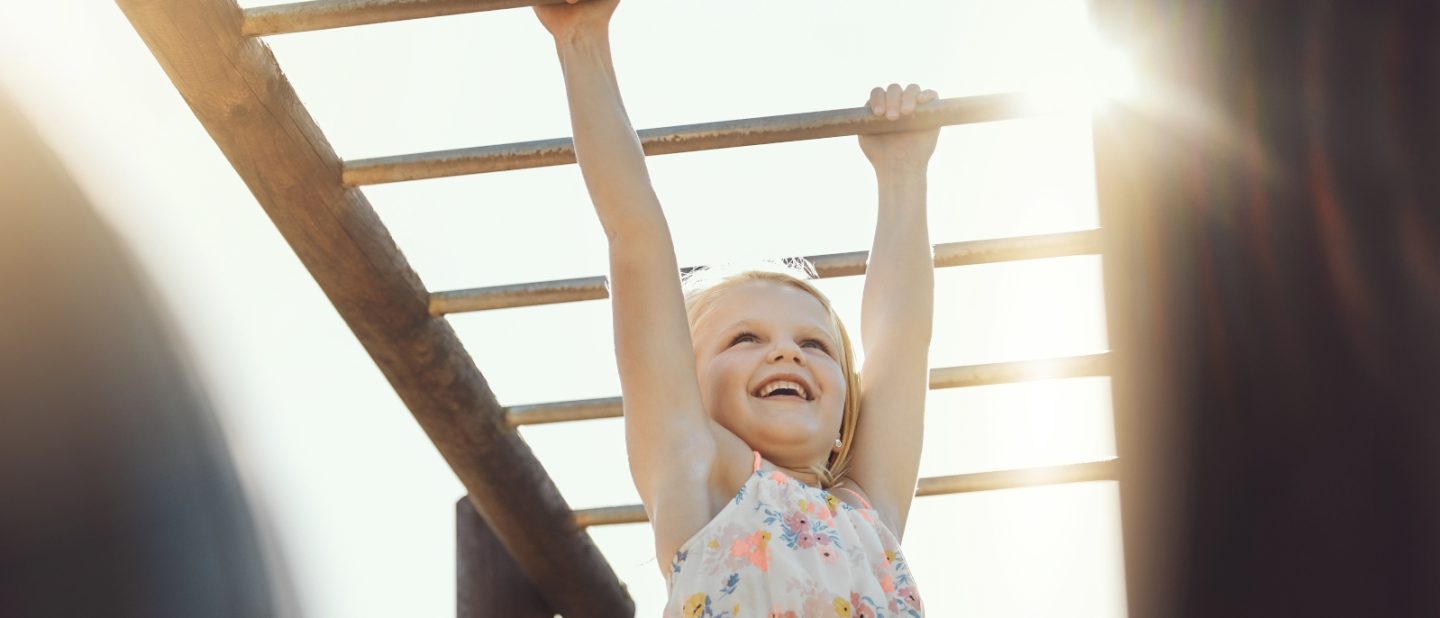
For children with physical disabilities, one of the most valuable (and often overlooked) pieces of playground equipment is the monkey bars. More than just a fun challenge, monkey bars help support a wide range of developmental skills – especially upper body and core strength.
Muscle strengthening is a key part of healthy development for all children, including those with physical disabilities. It supports mobility, joint stability, endurance and the ability to manage everyday tasks more independently. According to the Australian Physical Activity and Sedentary Behaviour Guidelines, children and young people aged 5 to 17 should take part in muscle- strengthening activities at least three times a week. This recommendation still applies for children with disabilities, though the type, intensity and frequency may need to be adjusted to suit each child’s needs (your child’s therapist can help guide you on what’s appropriate).
The good news? Strengthening doesn’t have to look like structured exercise. Play-based movement – like climbing, hanging and swinging on monkey bars – is one of the most natural, motivating and enjoyable ways for kids to build strength while having fun.
BUILDING STRENGTH, ONE SWING AT A TIME
Using monkey bars means engaging big muscle groups in the arms, shoulders, chest and core. Whether a child is simply hanging from one bar or pulling themselves across a few, they’re building strength with every attempt. That strength translates into real-world gains – things like pushing a wheelchair more easily, sitting with better posture, transferring in and out of equipment, or managing longer distances without fatigue.
SUPPORTING THE SENSES
The benefits of monkey bars don’t stop at muscles. They also provide excellent sensory input, especially for the proprioceptive and vestibular systems (which help with body awareness and balance). Hanging, swinging and shifting weight give the brain valuable information about where the body is in space and how it’s moving. This sensory input can help kids feel more stable, grounded and confident in how they move.
BOOSTING HAND-EYE COORDINATION
Monkey bars also support visual-motor skills. Kids need to spot the next bar, reach out, and adjust their grip – all of which strengthens hand-eye coordination. That’s the kind of skill that flows into everyday tasks, from handwriting and self- care to sports and using tech devices.

ENCOURAGING MOTOR PLANNING AND PROBLEM SOLVING
Each attempt on the monkey bars involves thinking ahead. Which bar comes next? Where should I shift my weight? What happens if I miss? These small decisions help build motor planning and problem-solving skills, both of which are essential for independence. That kind of learning is hard to replicate in structured settings – it happens best through trial, error and play.
BUILDING CONFIDENCE AND INDEPENDENCE
There’s something powerful about conquering monkey bars, whether it’s reaching one new bar or swinging across the whole frame. It’s a challenge that builds not just strength, but confidence too. For children with physical disabilities, those little moments of progress can feel huge – a reminder of what’s possible with time, support and persistence.
A FEW QUICK SAFETY TIPS
As always, supervision is important. Choose equipment that’s well maintained and set over a soft surface like rubber or sand. Start small, support your child physically or emotionally as needed, and let them explore at their own pace. Even just hanging from a bar for a few seconds can offer significant sensory and muscular benefits.
The goal isn’t to ‘finish’ the monkey bars – it’s to build skills and confidence, one movement at a time.