Let them choose how to play
In sport, the real learning doesn’t happen on the bench – it happens in play. Every decision a player makes – whether to pass, shoot, hold, or pivot – helps them grow. But there’s one person standing just off the field, shaping that growth every step of the way: the coach. Coaches guide, instruct, and support – but they don’t play the game. The players do.
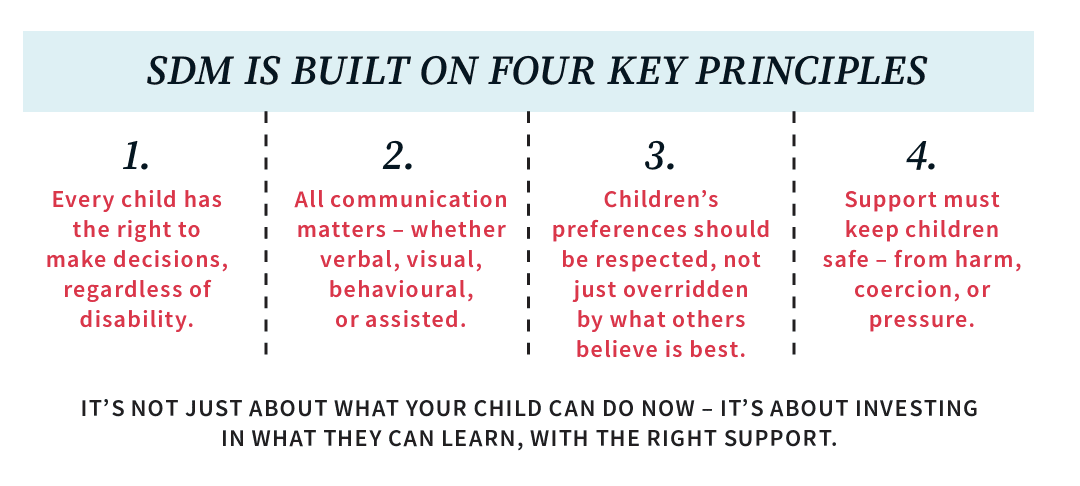
Supported Decision Making (SDM) works the same way. It’s not about taking over. It’s about being your child’s coach and preparing them to make their own calls, with guidance, space, and trust. You help them understand the choices, support them through wins and setbacks, and encourage them to lead. But the play? That’s theirs to make.
WHAT IS SUPPORTED DECISION MAKING?
Supported Decision Making is recognised by the NDIS – and by advocates across the disability space – as a rightsbased approach that empowers people with disability to make their own informed choices, with guidance from trusted supporters like parents, carers, teachers, and professionals. It’s about doing with, not doing for. Rather than assuming what a child wants or needs, SDM creates a structure around decision-making where a child is actively involved. Even if they need help to communicate, process, or follow through, they are still at the centre of the choice.
WHAT ABOUT NON-VERBAL KIDDOS?
Let’s name it – this is one of the most important questions when it comes to SDM:
What if my child doesn’t speak?
Too often, children who don’t use conventional speech are left out of decision-making – not because they don’t have preferences, but because we haven’t learned how to hear them.
But every child communicates. And every child deserves to be heard.
Whether it’s through eye gaze, gestures, body language, behaviour, images, or assistive tech – your child has a language. Our job is to learn it.
This is where speech pathologists can be powerful allies. While many people associate “speech therapy” with talking, a good speechy supports all forms of communication. They can help decode your child’s communication style, build tools to enhance it, and give you the strategies to use it confidently at home.
Supported Decision Making isn’t just for verbal kids. In fact, it’s even more important for kids whose communication style is misunderstood or underestimated. Because once they’re heard, they’re included – not just in choices, but in life.
WHY LET KIDS MAKE THE CALL?
Whether it’s sport, art, drama, cooking, or something else entirely – extracurricular choices are about more than hobbies. They help shape identity, confidence, and connection. When children are included in decisions – about what activity to try, who they want to be around, or when they’re ready to start something new – they learn that their voice has power.
When Supported Decision Making is part of their day-to-day, kids build:
- Self-awareness
- Resilience
- Optimism
- Social confidence
And maybe most importantly: they learn they don’t have to get it perfect to get it right.
SMALL DECISIONS = BIG IMPACT
The little things count. Whether it’s choosing the uniform colour, picking who to sit with, or deciding what role they want to try this week – these “small” choices help kids understand they are in charge of their own lives.
You’re not just helping them choose a sport. You’re helping them build a lifelong sense of agency.
HOW TO BE A DECISION COACH: 5 STEPS THAT WORK
You don’t need a toolkit to get started – just a shift in mindset. These five steps, adapted from the Make Decisions Real project, can help bring SDM into everyday parenting:
1. SET THE DECISION

Frame the choice clearly: “Do you want to try soccer, dance, or swimming this term?” or “Do you want to bring your snack or eat it after the game?”
2. LISTEN UP
Pay attention to words, actions, reactions, facial expressions, or mood. Use pictures, videos, or AAC (augmentative and alternative communication) if needed.
3. EXPLORE THE OPTIONS TOGETHER
Try a trial class. Watch a video. Drive past the centre. The more real the options feel, the more your child can connect to what they want.
4. SUPPORT THE NEXT STEP
Once they choose, help them follow through – enrolling, packing their bag, or showing up on the day.
BRINGING IT FULL CIRCLE
Like any great coach, your role is to prepare, support, and then step back.
Supported Decision Making isn’t about controlling the play – it’s about raising confident players. Children who know their choices matter. Children who believe they belong in the game.
Whether your child communicates with words or gestures, drawings or devices – they deserve the chance to lead. Because in sport, in play, and in life, every child deserves to hold the ball. Make the call. Learn from the play. Celebrate the win – in whatever form it takes.
By Monique Power. RippleAbility is a paediatric specific disability provider, helping families navigate complex systems of support and build their capacity to advocate for appropriate supports and services for their child. rippleability.org Email: [email protected]