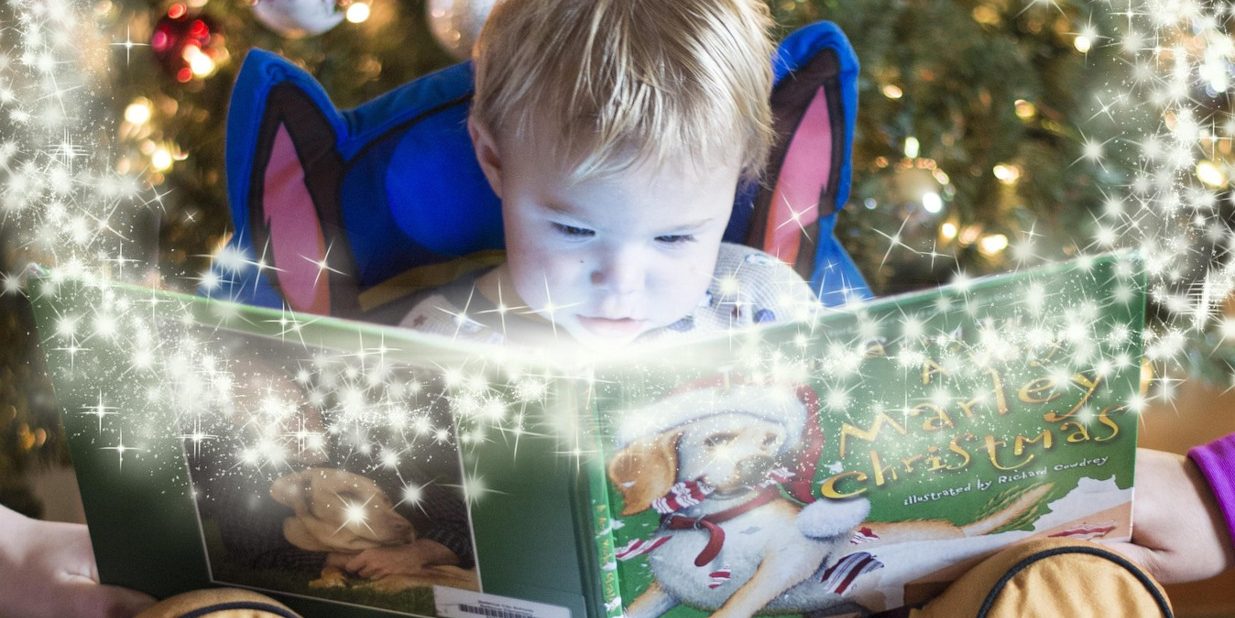
Christmas by the book
Beat the summer-break literacy slide with these seasonal reading & writing ideas.
Reading doesn’t have to mean sitting still with a chapter book. It can be spoken, listened to, watched, drawn, cooked, acted out, or even sung. Whether your child loves sensory play, storytelling, or simply sharing time with you, there are so many ways to bring language and literacy into your summer and Christmas celebrations.
Create a cosy (or cool) holiday reading spot: Set up a little summer reading nook – under a tree in the backyard, inside a tent or cubby, or in an air- conditioned room with fairy lights and soft cushions. Add a sensory-friendly touch like a weighted blanket, noise-cancelling headphones, or fidget tools if your child uses them. This space can become a safe, familiar place for stories to unfold.
12 days of books: Wrap up 12 books – new, borrowed, second-hand or already on your shelf – and let your child unwrap one each day. Include a mix of formats (picture books, audio stories, tactile books, graphic novels), and don’t be afraid to repeat favourites.
Write a letter to Santa(or someone special): Help your child write or create a letter to Santa or a loved one, teacher, pet, or favourite character. This can be done with words, drawings, symbols, or assistive communication devices. It’s a great way to practise writing, expressing wishes, and using descriptive language.
Make a Christmas scrapbook or storyboard: Gather photos, magazine clippings, stickers, wrapping paper, and drawings, and create a holiday- themed scrapbook together. Use it to tell the story of your summer or create an imagined Christmas adventure.
Explore Christmas poetry and rhymes: Try reading or creating simple festive poems – like acrostic poems using your child’s name (e.g., A is for angel, L is for lights…), or silly rhymes about the Christmas tree or Santa’s elves. Rhyming is great for language development, and poems can be short and fun for kids who have limited attention spans.
Play with Christmas alliteration: Use toys, food, or decorations to explore alliteration (repeating the same starting sound). For example: Sizzling sausages sizzle on Santa’s surfboard! Turn it into a game, eg – how many silly “S” or “J” words can you find in the house? This supports phonemic awareness and creativity in a playful way.
Enjoy audiobooks and read-alouds: Audiobooks are a great option for children who find reading difficult or tiring. You can borrow them from libraries or find festive stories online. Reading aloud together, taking turns or listening to a narrator also makes stories more accessible and interactive. Add in sound effects, puppets, or actions if your child enjoys sensory input.
Get cooking with a Christmas recipe book: Choose a simple, illustrated holiday recipe; gingerbread, icy poles, or reindeer snacks, and read through the instructions together. Help your child follow the steps and talk about the ingredients, measurements, and textures. It’s a great way to combine literacy, sensory learning, and festive fun.
Visit a library holiday program: Many libraries run inclusive summer holiday programs with storytimes, craft sessions, or sensory-friendly events. These can be a great way to enjoy stories in a social setting, especially if your child enjoys routines or benefits from structured outings.
Keep it flexible and fun: Most importantly, follow your child’s lead. Some days they might only manage five minutes with a book, and that’s okay. Other days they might be ready to read the same story three times in a row. Focus on connection and enjoyment more than ticking off learning goals.