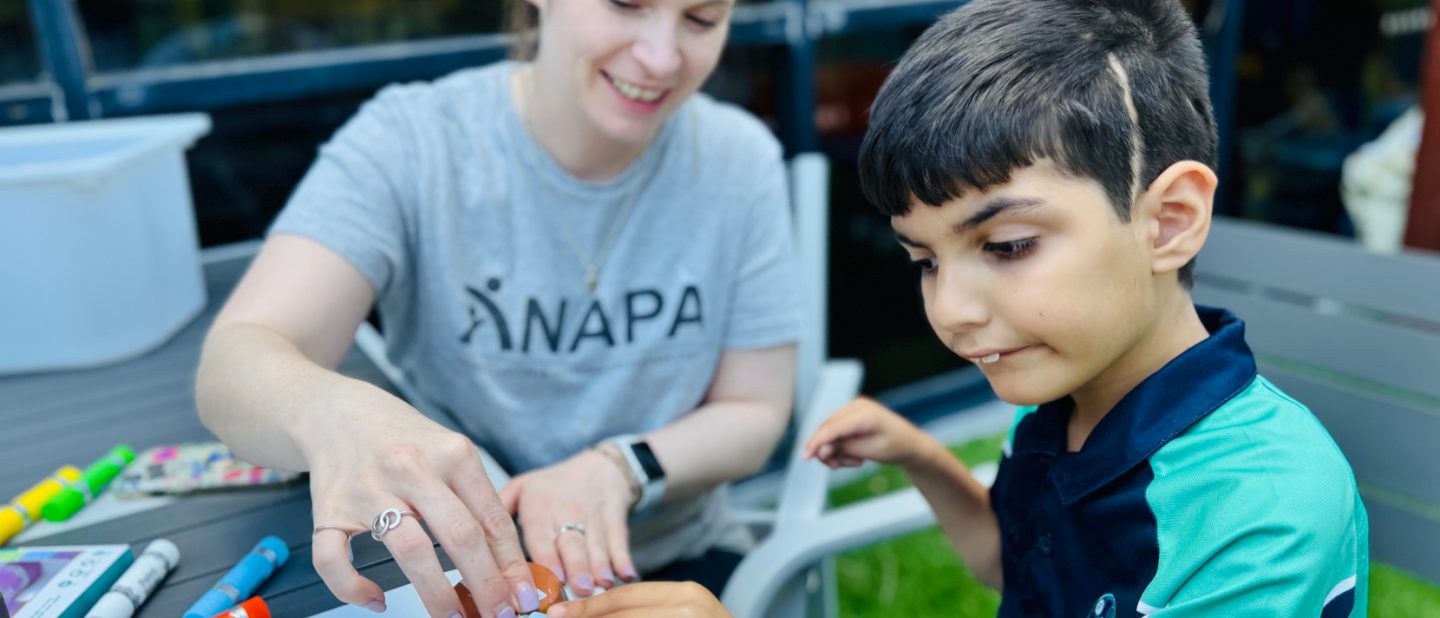
10 things you can use for therapy at home
By Laura Connolly, Occupational Therapist and Clinical Director, NAPA Sydney
Before you click ‘purchase’ or head to the shops, take a look around your home – you may already have some great therapy tools in disguise!
1. Couch Cushions & Pillows
Cushions can be used to create soft, unstable surfaces for sitting, kneeling, crawling, or standing. This adds just the right amount of challenge to help develop balance reactions, core strength, and body awareness. Try having your child sit or stand on cushions while playing, reaching, or engaging in everyday activities.
2. Rolled Towel
A rolled towel is a simple way to support tummy time by placing it under your child’s chest. This helps make the position more manageable while still encouraging active head lifting and engagement. The bigger the roll, the more support you are giving; the smaller/flatter the roll, the more your child has to work against gravity. It’s a great way to build neck control, shoulder stability, and upper body strength.
3. Paper Plates
Paper plates can turn your floor into a fun “skating” activity. Place one under each foot and encourage your child to slide one leg at a time forward, backward, or side to side. This supports coordination, weight shifting, and the leg control needed for crawling and walking. You might need to stay close for this one as it can become very slippery! Paper plates are also excellent for cutting practice as they are a bit sturdier than regular paper, making them great for developing scissor skills and using two hands together. You can also punch holes around the edges for threading activities, adding another fine motor challenge.
4. Masking Tape
Masking tape can be used to create lines, shapes, and obstacle courses anywhere in the home (on the ground but also on the walls!). Children can walk along lines, jump between shapes, or crawl under “laser beams.” They can also trace the tape paths with their hands or fingers, which helps develop early pre-writing patterns, bilateral coordination, and visual-motor skills. These games support motor planning, balance, and whole-body coordination in a fun, structured way.
5. Bottles or Cans (Weights)
Filled bottles or canned food can be used as simple weights during play. Children can carry, push, pull, or lift them as part of everyday games or chores. This helps build strength, endurance, and awareness of their body working against resistance. You can also set them up as a bowling alley or target game, encouraging your child to aim, throw, and knock them down, which adds a fun way to practice coordination and accuracy.
6. Laundry Basket
Laundry baskets are incredibly versatile for at home therapy! They can be pushed or pulled (add weight for more challenge), used for tossing games (get those socks in there!), or even used for early sitting activities. You can also attach a rope to practice the coordination for pulling (lots of skills can be developed her – grip strength, bilateral coordination and even core and trunk control!). Overall using a laundry basket can build strength, coordination, and regulation through “heavy work” input.

7. Clothes Pegs
Clothes pegs are great for developing fine motor skills and finger strength. You can clip them onto cardboard, boxes, or clothing, or use them in simple games and patterns. This encourages a strong pincer grasp, which is important for writing and self-care skills. You can also create colour matching games by having your child clip them onto matching coloured paper.
8. Muffin Tins
A muffin tin is perfect for sorting and organising small items into separate sections. Children can sort by colour, shape, or type, or use tongs or fingers to transfer items between spaces. You could even use kitchen tongs to add an extra challenge. This supports fine motor coordination, visual organisation, and early learning skills.
9. Pasta
Pasta is not just for eating! Children can thread it onto string or pipe cleaners, scoop and pour it between containers, pick it up with fingers or tongs, hide it in sensory bins, or press it into playdough. These activities build fine motor control, hand strength, coordination, and sensory exploration.
10. Sponge (Water Play or Cleaning Games)
Sponges are great for building hand strength through squeezing, especially during fun “cleaning” or water play activities. Remember to get lots of reaching involved for extra shoulder stability and strength work. You can also cut a sponge into smaller pieces and turn it into a fine motor challenge by having your child push the pieces through an egg carton, container holes, or even a slit cut into a tennis ball. This supports grip strength, coordination, and controlled hand use, while also building independence through everyday routines.
About the Author
Laura Connolly is an Occupational Therapist and Clinical Director at NAPA Sydney. She is passionate about helping children reach their full potential and loves bringing creativity into therapy to make it meaningful, fun, and functional for families. Originally from Ireland, Laura brings warmth, energy, and a practical, hands-on approach to her work, and enjoys finding simple, everyday ways to support children’s development.
This section was adapted from a blog originally written by her colleague, Pauline Chung.