Dancing toward inclusion
AllPlay Dance fuses research and rhythm, reimagining movement for autistic and disabled children, says Katherine Granich.
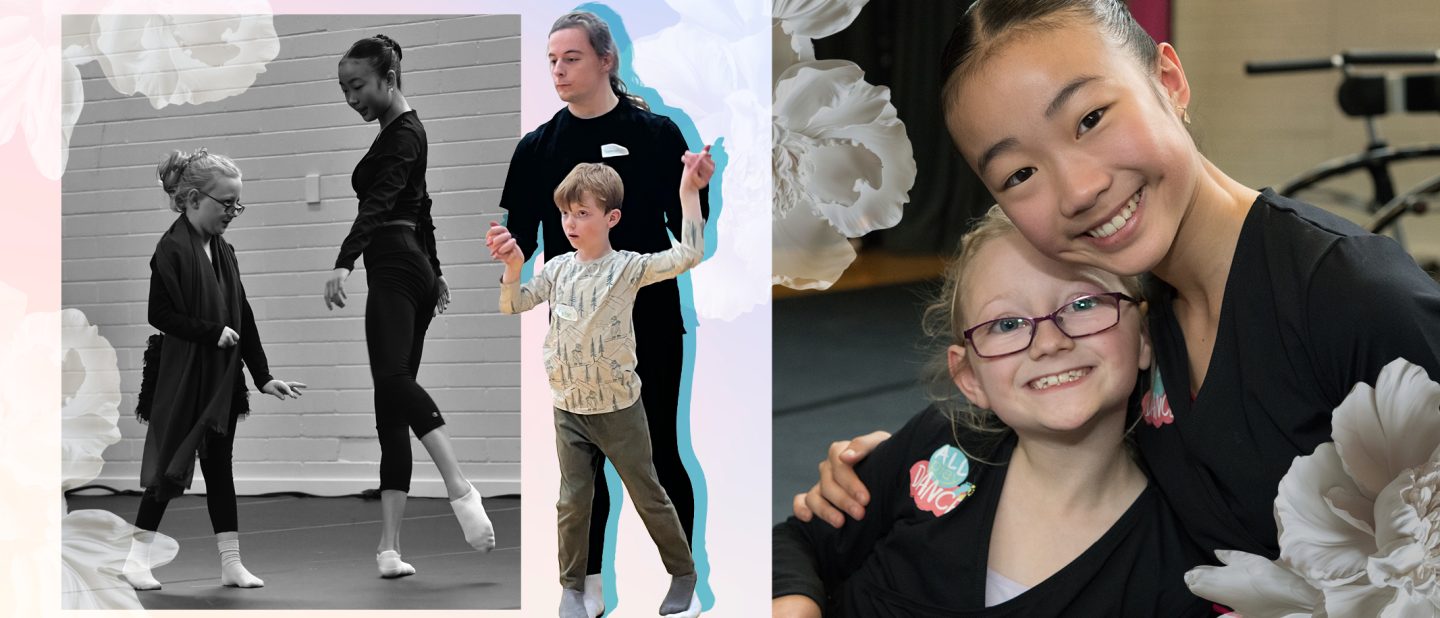
At first glance, AllPlay Dance looks like any other children’s dance class. Music plays, laughter fills the studio, and young dancers move in their own unique ways. But look closer and you’ll see something remarkable: a program intentionally designed so every child can belong.
Created by Professor Nicole Rinehart, a clinical psychologist in Monash University’s School of Psychological Sciences, AllPlay Dance turns research into real-world inclusion. Drawing on years of clinical expertise and co-design with families, educators, and professional dance companies, it helps children with autism and other disabilities participate in movement, learning, and play.
“We’re not trying to change the child. We’re changing the world around them so that it fits,” says Nicole. “It’s not about fixing the child; it’s about fixing the system.”
The origins of AllPlay
As a psychologist and academic, Nicole spent years in hospitals and labs studying child development. But when she became a parent, she saw a huge gap between what research showed helped children thrive and what was happening in the community.
Back in 2013, when the NDIS was just beginning, disabled children were rarely included in mainstream sport or recreation. “Once I saw that kind of exclusion, I couldn’t unsee it,” she says. “I became determined to change things.”
So one day, while her kids were playing footy, Nicole walked across the oval and started chatting with the coaches about how they could make the game more accessible. That conversation was the start of AllPlay Footy, founded in 2015 – the first in the AllPlay series of programs translating research into inclusion.
Over the past decade, AllPlay has grown into AllPlay Life, AllPlay Learn, and AllPlay Move, which includes AllPlay Footy and now AllPlay Dance. But the focus remains the same: turning evidence into everyday opportunities.
“Nothing happens in AllPlay without a research study,” says Nicole. “Everything we do is evidence-based – that’s our promise to families.”
Research on the dance floor
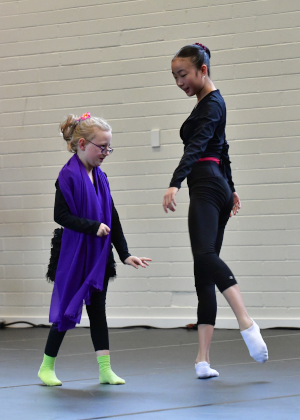
In an AllPlay Dance class, research hides in plain sight. Children are paired with older “buddies” – often elite or pre-professional dancers – who model movements, encourage, and help co-create routines. For the children, it’s a dance class. For Nicole’s team, it’s a randomised controlled trial measuring how inclusive dance builds motor skills, confidence, and participation.
“You can’t ask a child to be brave before they feel safe,” Nicole says. “So we build safety first – through music, repetition, familiarity, and friendship. Once they feel safe, the bravery follows naturally.”
Some children begin straight away, others later, as part of the study design. This helps the team understand what works best, ensuring inclusion is both evidence-based and supportive.
“It’s about designing environments that work for all children from the beginning, instead of retrofitting inclusion later,” Nicole explains.
The science behind the magic
AllPlay Dance may look effortless, but every step is guided by data. The program’s studies show measurable improvements in neuromotor skills – balance, rhythm, coordination – which feed directly into confidence, communication, and independence.
“We talk a lot about social and communication skills,” Nicole says, “but movement is fundamental. It’s the foundation for how we engage with the world.”
Parents often notice changes far beyond the studio. Children who start out standing quietly at the edge of the room often end up dancing with peers, smiling, or initiating play at home. “It happens organically,” Nicole says. “Children grow because they’re enjoying themselves.”

And it’s not only the children who change. Parents, teachers, therapists, and dancers describe the program as transformative. “One of the directors told me, ‘You’ve made our dancers better people,’” Nicole recalls.
What inclusion really looks like
Every AllPlay Dance class is different, because every group of children is different. One child might move freely from the start; another might take weeks to join in. Both are equally celebrated.
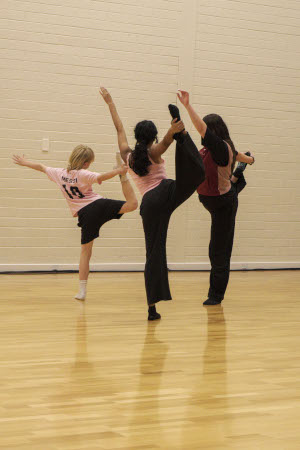
AllPlay Dance co-founder Dr Olivia Millard, Senior Lecturer in Dance and Associate Head of School (Teaching & Learning) at Deakin University, guides the child-led, co-designed process. “Children and their buddies explore movement together over 10 weeks, and it all comes together in a final performance,” Nicole says.
The model also has a strong equity focus. Girls with disabilities are often under-represented in community sport and the performing arts, so the team works to ensure they are equally visible and supported. The program also partners with First Nations communities, CALD populations, and families in regional and remote areas to ensure cultural safety and representation.
Across every setting, the message is the same: every child deserves to dance.
The bigger picture
AllPlay Dance is currently running a randomised controlled trial for autistic children aged 7 to 12, with the first cohort recently completed. For many families, the impact was immediate – children who began shyly on the edge of the studio were dancing with confidence by the end. One parent, moved by their child’s transformation, even offered to pay out-of-pocket to keep it going.
Through a generous $1.7 million donation from long-standing philanthropic partner Manny Stul and the Moose Happy Kids Foundation, AllPlay Dance will be scaled up to reach even more children and families.
“As an innovative, global organisation, we are constantly looking for partners that share our vision to create a positive difference in the lives of children. As the seed funder, The Moose Happy Kids Foundation invested in AllPlay from the beginning because we could clearly see the vision to create a ‘first of its kind’ program,” says Manny Stul, Executive Chairman and Co-Owner of Moose Toys. “Witnessing the progress now extended to other countries, including China, makes us as proud as ever to partner with AllPlay Dance to improve mental and physical health outcomes for children around the world.”
In 2024, that partnership helped launch a collaboration with the Beijing Dance Academy – extending AllPlay’s inclusive approach beyond Australia. Nicole’s next goal is to establish a National AllPlay Child and Family Centre at Monash University to support programs nationwide.
“We want a world where inclusion is just how things are done,” she says. “When that happens, AllPlay will have done its job.”
Get involved
AllPlay Dance is currently running a free national research trial of dance classes for autistic children aged 7 to 12. Families can register their interest in taking part here – https://redcap.link/AllPlayDanceRCT, and find more information on the program at allplay.org.au